John Singer Sargent
1856 – 1925
Madame X, Venetian watercolours and the Boston murals - the art of John Singer Sargent
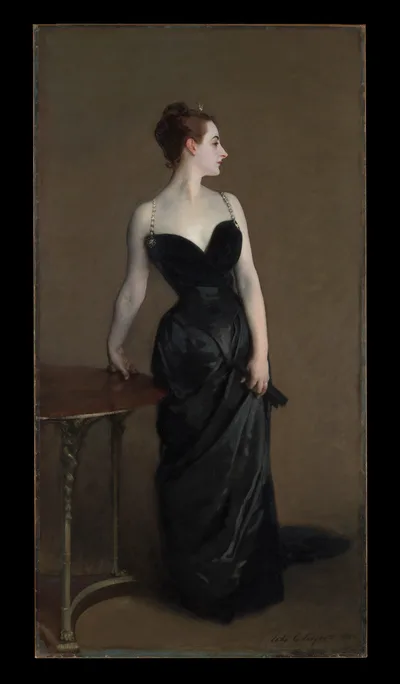 Madame X, 1883
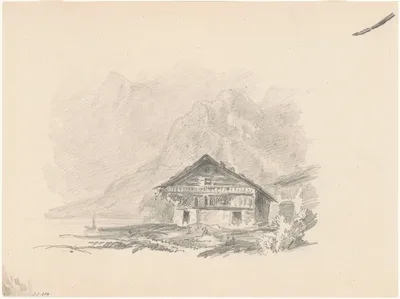
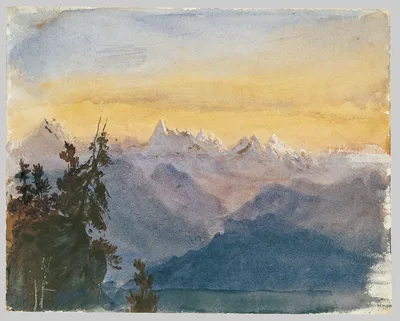
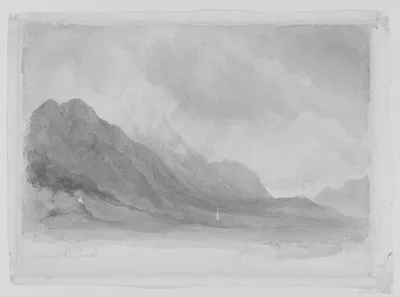
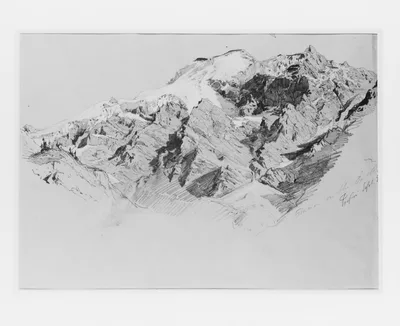
John Singer Sargent was born in Florence on January 12, 1856, to American parents who had left the United States for Europe two years earlier. His father, FitzWilliam Sargent, had been an eye surgeon at Wills Eye Hospital in Philadelphia and a capable medical illustrator; his mother, Mary Newbold Singer Sargent, was a capable amateur artist, and the family's constant moves between European cities and resorts kept the boy sketching. Sargent's schooling came largely from hotels, museums and sketchbooks, and as a boy of thirteen he took watercolour lessons from the German landscape painter Carl Welsch. The Met's early Alpine sheets in this archive, among them Mürren, Eiger and View from Mount Pilatus (all 1870), come from those wandering years.
In May 1874, aged eighteen, he settled in Paris and entered the teaching studio of the fashionable portraitist Carolus-Duran, while also sitting the entrance examination of the École des Beaux-Arts. He showed at the Salon for the first time in 1877, and the following year sent a sunlit beach scene of oyster gatherers at Cancale, the canvas now at the National Gallery of Art as En route pour la pêche. In 1879 his portrait of Carolus-Duran won an honourable mention, and he travelled to Spain to copy Velázquez at the Prado; trips to Morocco, Haarlem and Venice followed in 1880, and he returned to Venice in 1882.
By 1883 Sargent had his own studio on the boulevard Berthier and had begun a portrait of Virginie Amélie Avegno Gautreau, wife of the banker Pierre Gautreau. Shown at the 1884 Salon as Portrait de Mme ***, the picture caused a scandal, partly because one strap of her gown had slipped from the sitter's shoulder; Sargent later repainted it upright. The episode contributed to his decision to leave Paris. He spent the autumns of 1885 and 1886 at Broadway in the Cotswolds, where he painted Carnation, Lily, Lily, Rose at dusk, and in 1886 he moved to London, taking over Whistler's former studio in Tite Street, Chelsea. When Carnation, Lily, Lily, Rose was shown at the Royal Academy in 1887 it was bought through the Chantrey Bequest for the Tate, the first of his works to enter a public collection.
America made him rich. He crossed to New York in September 1887, held his first one-man exhibition at Boston's St. Botolph Club early in 1888, and on a second visit in 1890 painted some forty portraits in nine months. That year he was appointed muralist for the new Boston Public Library, a cycle later called The Triumph of Religion that occupied him until 1919 and was never finished. Elected an associate of the Royal Academy in 1894 and a full academician in 1897, he was by then one of the most sought-after portrait painters on both sides of the Atlantic.
In 1907 he declared that he would paint no more commissioned portraits, turning instead to landscape oils, watercolours made on summer travels through the Alps, Italy and Spain, and quick charcoal likenesses he called "mugs." He was in the Tyrol when war broke out in 1914, and spent 1916 to 1918 in the United States, painting in Florida and the Canadian Rockies and accepting a commission to decorate the Museum of Fine Arts, Boston. Back in Britain in 1918 he went to the Western Front as an official war artist with Henry Tonks; the result, Gassed, completed in March 1919, was voted picture of the year at the Royal Academy. In 1920 Harvard commissioned memorial murals for its Widener Library.
Sargent died in his sleep at his Chelsea home in April 1925, the night before he was due to sail for Boston to oversee the installation of his last murals at the Museum of Fine Arts. He is buried at Brookwood Cemetery, near Woking in Surrey. The Colonnade murals were unveiled in Boston that November, alongside a memorial exhibition.
"I suppose it is the best thing I have done."
— John Singer Sargent